Robust Spill Control Solutions for Construction Sites
Construction
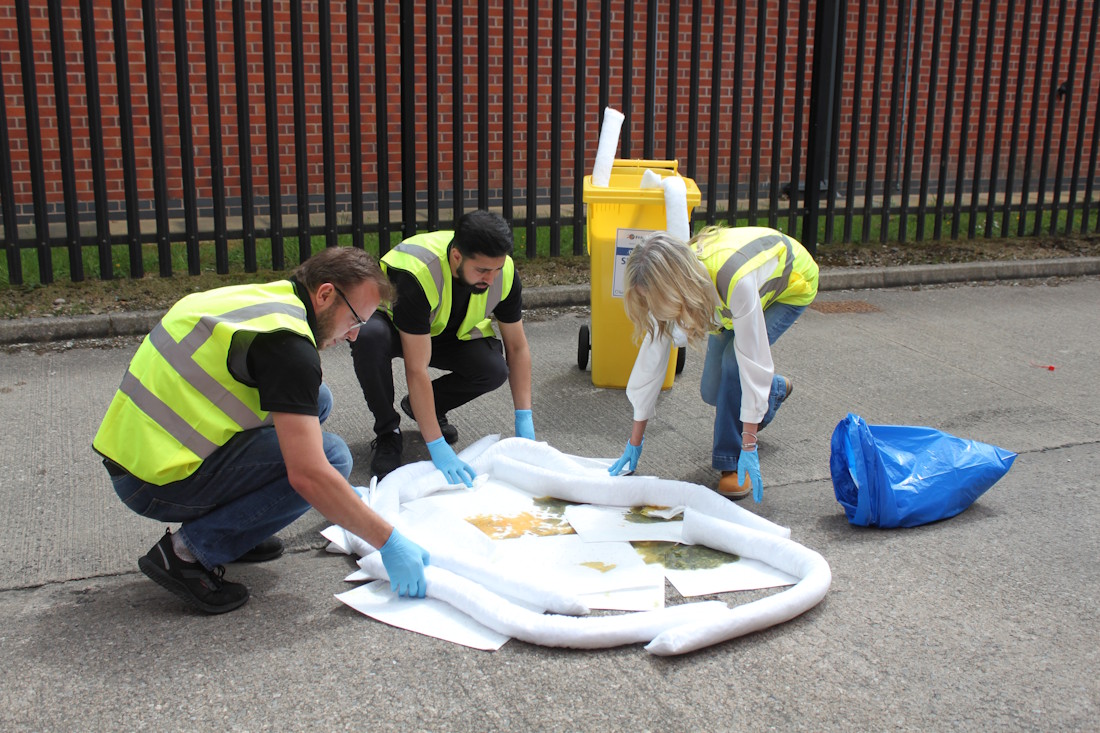
Construction operations require robust spill control solutions for diverse fluid challenges. FyterTech offers specialised absorbents and spill prevention products designed for the demanding conditions of construction sites - handling everything from fuel and solvent spills to contaminated runoff while protecting workers and the environment.

Spill Control Solutions for Construction
For the construction industry, there are a number of things to consider when protecting people and the environment from the effects of spilt and leaked fluids.
Maintaining site safety and protecting the environment requires forward planning and consideration of the site’s location with regard to preventing pollution from contaminating the surrounding land and drainage systems.
The wide variety of applications, fluid types and uses involved in construction means that both absorbents and spill prevention products are equally important.
What type of spill absorbent is best suited for Construction?
Essentially, the fluids involved in construction are oil-based fuels and solvents, as well as water-based precipitation run-off that can be contaminated with either silt or oil-based pollutants.
White coloured Oil Only absorbents are hydrophobic. They absorb oil-based fluids but repel water-based fluids. For locations outside, subjected to weather exposure, oil-only absorbents are particularly suited to recovering just oil-based fluids without soaking up any falling or pooled precipitation.
Oil-only white absorbents are particularly suited when refuelling or servicing machinery, plant, vehicles or equipment.
Grey/black Maintenance absorbents are hydrophilic and take up both water-based fluids along with oil-based fluids at the same time. These are the best all-around options for recovering spills or liquids of any type.
In most instances, a Maintenance grey/black absorbent will be the optimum choice for cleaning and recovering the widest possible range of water-based spilt fluids. Laminated pads are stronger and are better suited to repeated scrubbing of hard or rough surfaces.
Yellow Chemical absorbents are also hydrophilic and will absorb both oil- and water-based fluids at the same time. The yellow colour of these absorbents indicates that they should be used for recovering aggressive fluids such as acids and alkalis, and once used, should be treated and disposed of with extreme caution.
Yellow chemical absorbent is best to have available if aggressive substances like acids or alkalis are present. Most often, a Chemical spill kit will be the best option for these kinds of spills.
All of the above formats are made from meltblown polypropylene. They are inert and will not react with chemicals and are flame-retardant (they will, however, burn if incinerated).
Sustainable spill solutions in construction
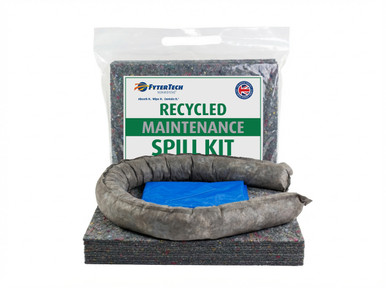
As an alternative to the above, we offer a range of environmentally friendlier absorbents. These are either made from recycled meltblown polypropylene or are made from cellulose natural fibres. These environmentally friendly absorbents can be included towards achieving an ISO 14001 Environmental Management Standard. Natural fibre absorbents are in some cases more absorbent. However, choosing an environmentally friendly absorbent needs to be considered carefully as a used or contaminated absorbent will need to be disposed of exactly the same way as a meltblown polypropylene absorbent.
What spill absorbent formats are best suited to Construction?
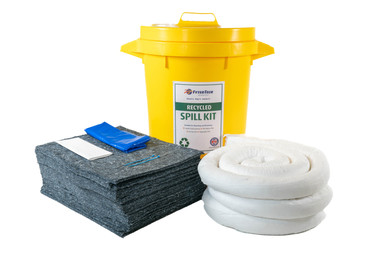
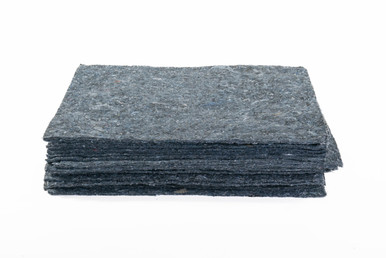
Spill Control Pads are available in different weights (light- through to -heavy weights) and also in unbonded, bonded and laminated constructions. As a guide, the heavier the weight, the more fluid the pad will absorb. With regards to the construction, laminated pads are stronger and feature less linting (stray fibres becoming detached), bonded pads are slightly more absorbent, and unbonded pads the most absorbent but not as strong. For wiping or scrubbing, we generally recommend a medium-weight single laminate Maintenance or Oil-only pad, depending on the use and fluid to be recovered. All but the unbonded pads feature perforations so that just the correct amount of absorbent can be selected.
Spill Control Rolls are exactly the same as pads, but instead are formed of continuous lengths of absorbent which are rolled up. Rolls of absorbent material are ideal for rolling out over larger areas to collect spilt or leaked fluids next to machinery. We recommend a single laminate absorbent with the meltblown core face down. This maximises the absorption of fluids whilst reducing the slip risk. Rolls of absorbent material are also useful for protecting surfaces.
Spill Control Socks and Pillows are used to collect spills or leaks from around or beneath vehicles or machinery. Socks are used to contain the fluid by providing a barrier while also absorbing the liquid. Pillows are for capturing leaks or spills under machinery that are too big for a pad.
Drum tops are placed inside the top rim of a standard 210 litres (55-gallon) drum. They feature apertures for both pouring and breather holes.
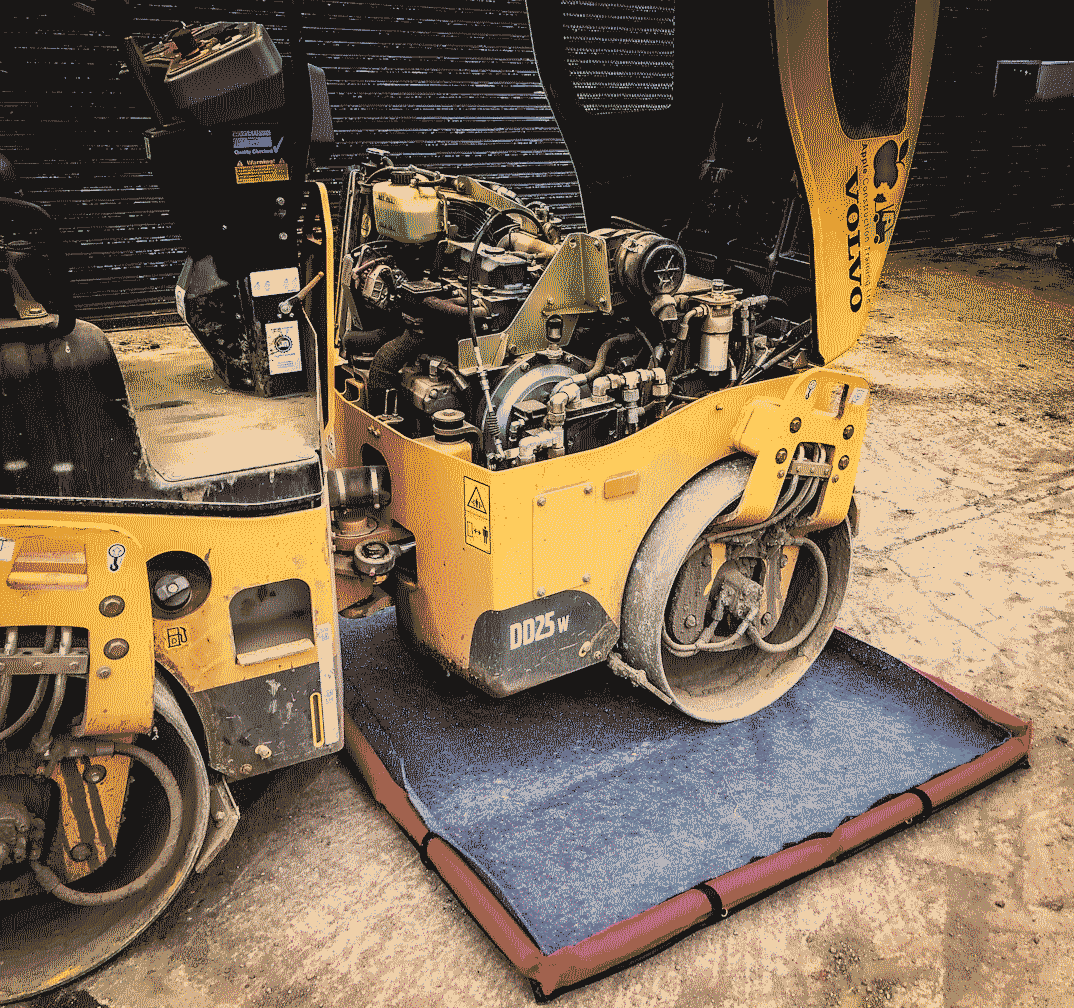
Site Mat is a two-part unit which is placed under plant or equipment when being refuelled or serviced. An inner polypropylene liner filters and traps the fuel or oil-based liquid, while the porous side walls allow rainwater to simply run off.
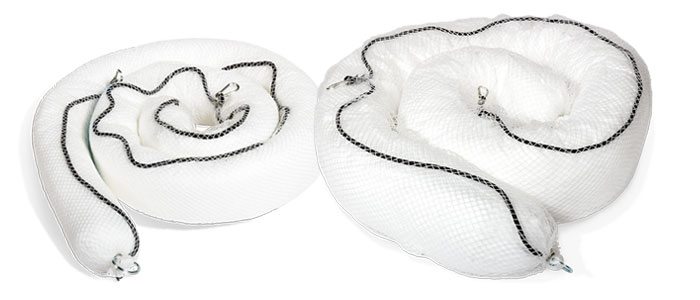
Absorbent Booms and Bilge Booms are flexible tubes of absorbent material that can be floated on the water surface to surround and prevent spills or leaks from spreading, whilst also absorbing the oil-based fluid. These are available in different lengths. Eyes and snap-hooks allow multiple booms to be attached together to form long floating barrages. A 13cm diameter boom is available for inshore or inland water locations such as rivers, ponds or lakes. A smaller bilge boom is also available which can be placed in water drainage courses to filter out oil-based fluids.
Absorbent Sweeps are long ‘curtains’ of polypropylene that are designed to be towed behind a boat or secured across a water course to collect the final sheen of oil from the surface of the water.
Choosing a spill kit in construction
To keep the workforce safe from slips, trips or injuries, it is important to have enough absorbent material available to recover spills. In most cases, a spill kit provides what is required in a pre-packed container.
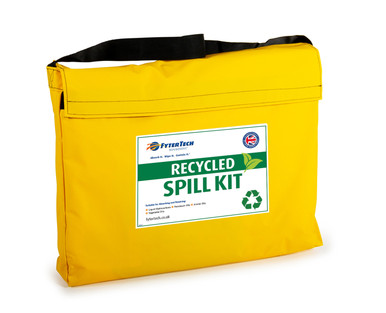
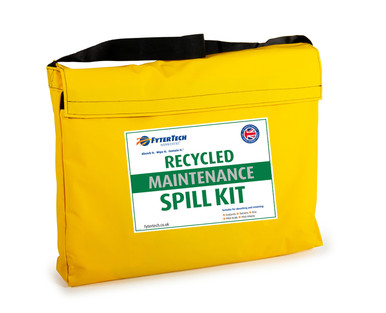
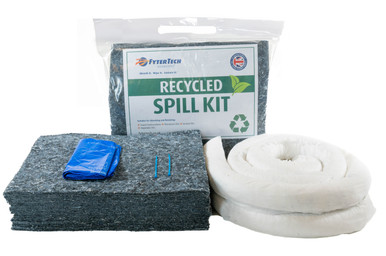
Portable spill kits can be taken to the spill location or stored on board a vehicle. These take the form of clip-close spill kits in either 15, 20 or 30ltr sizes. A vinyl satchel 50ltr edition is also available.
Static spill kits can be located where there is a known risk of a spill occurring. These will be more suited to refuelling locations.
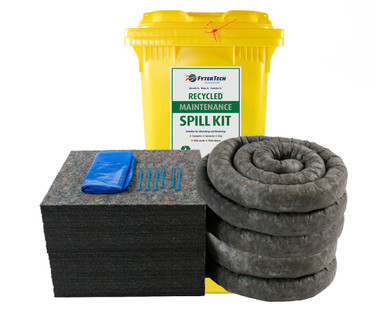
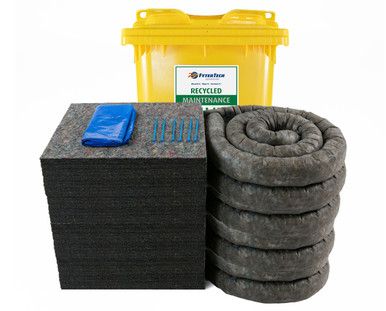
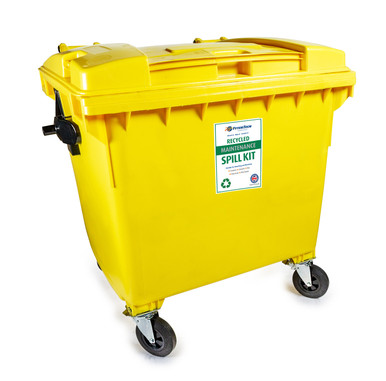
Wheeled spill kits allow a large quantity of absorbents to be quickly moved to the site of a spill. These range from 120ltr wheelie bins up to four-wheeled 1,000ltr versions. These would be particularly suited to building refurbishment projects where it is important to protect the project from significant pipe bursts.
Spill prevention equipment
To keep fluids in secondary containers safely stored, we have an extensive range of containment and storage units. These provide secure, robust solutions for a wide, varied range of containers.
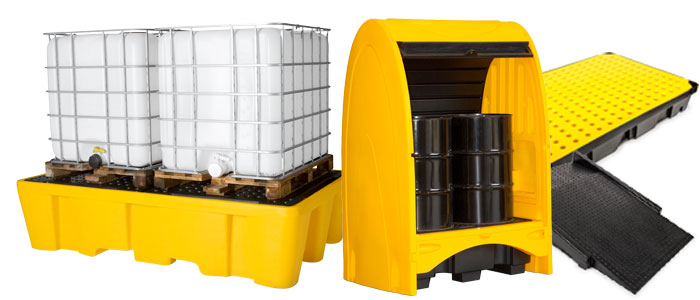
Workfloors are modular units with an integral sump built in. The sump catches any spilt fluids and can be drained off or recovered. Available in a range of sizes and with access ramps, they provide a flexible and reliable solution for accessing and storing drums and containers.
Spill Pallets are designed to store fluid containers such as drums and IBC caged containers. They also feature regulation-compliant sump capacities to capture any spilt fluids. Available in a wide range of sizes and for different containers, they are a regular feature on many construction sites. There are weathertight options too, which prevent rainwater from filling the sump if stored outside.
Transporter units allow drums and containers to be transported around a site safely. They feature a regulation-compliant built-in additional fluid barrier capacity to prevent spilt fluids from reaching and polluting the environment.
Spill control solutions to prevent spilt or leaked liquids from entering drains and water courses
These products form a barrier to prevent the spill or leak from entering into drains.
Drain covers are available in mechanical, soft and malleable plastics, or bentonite clay. They can be moulded to the surface around the drain to prevent fluids from running into the water system.
Spill Berm is a length of flexible raised plastic with a flat base. It can be located around the perimeter of a drain to divert or hold back any spilt or leaked fluids. Interlocking ends mean that multiple spill berms can be connected together to form longer lengths. As with the drain covers above the spill berm is also reusable.
The law from the HSE - The Health and Safety at Work etc Act 1974 (HSWA)
The Health and Safety at Work Act 1974 requires employers to ensure the health and safety of all employees and anyone affected by their work, so far as is reasonably practicable, which means balancing the level of risk against the measures needed to control the risk in terms of money, time or trouble. This includes taking steps to control slip and trip risks.
Employees have a duty to take care of their own health and safety and that of others and must use any safety equipment provided.
Health and Safety at Work etc Act 1974
The Management of Health and Safety at Work Regulations 1999 (Regulation 3)
Build on the HSWA and include duties on employers to assess risks (including slip and trip risks) and take action where necessary.
Management of health and safety at work
The Workplace (Health, Safety and Welfare) Regulations 1992 (Regulation 12)
Require floors to be suitable, in good condition and free from obstructions. People should be able to move around safely.
The Workplace (Health, Safety and Welfare) Regulations 1992
Site Surveys and Spill Recovery training
To help you identify spill and leak risks, we can provide a site survey. An experienced and highly knowledgeable member of our team can attend a business site and provide a written report identifying the risks. Along with the risk identification, suggestions for liquid safety solutions will be provided.
To allow a business’s employees to better respond to a spill, we provide spill training to ensure that in the event of a spill, everybody knows how to safely respond and follow a set procedure.